

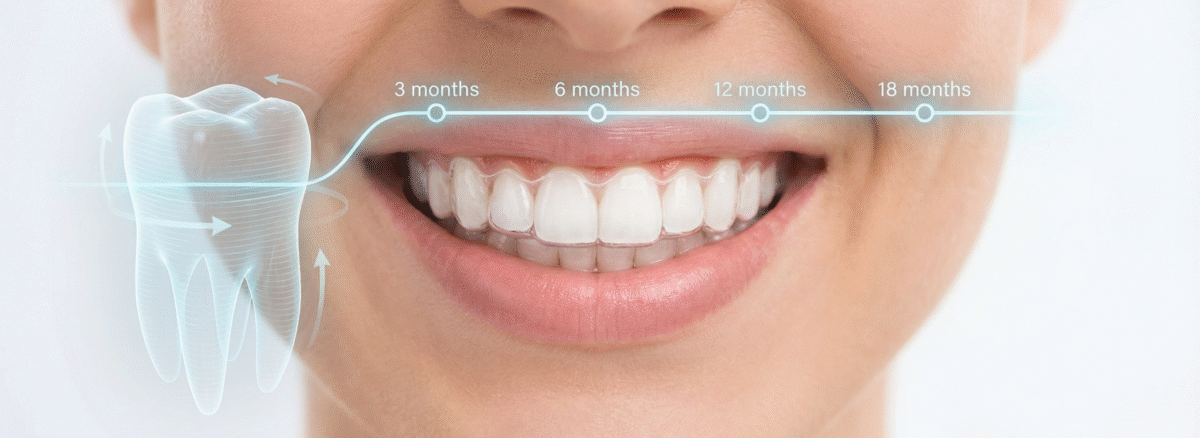
A confident smile with perfectly aligned teeth is a goal many strive for. With the massive advancements in digital dentistry, clear aligners have become a popular choice thanks to their aesthetic and practical advantages. However, the most frequent question in clinics is: How long does clear aligner treatment take?
In this article, we will explore the factors influencing treatment duration from a scientific perspective and how precise digital planning with the AlignWB system contributes to achieving predictable and accurate results.
How Long Does Clear Aligner Treatment Usually Take?
According to clinical studies and recommendations from the American Association of Orthodontists (AAO), the average duration for clear aligner treatment ranges between 6 to 18 months for many mild to moderate cases.
However, this duration varies based on the complexity of the orthodontic case. Initial noticeable changes in tooth alignment may appear within the first few weeks, while more complex cases may require a longer period to ensure proper occlusion (bite) and long-term stability of the results.
3 Factors That Determine Your Aligner Treatment Speed
1. Case Type (Clinical Classification)
The speed of tooth movement depends on the specific issue being addressed:
Simple Spacing: Small gaps can often be closed within a few months, depending on the gap size and the doctor’s approved plan.
Crowding: Treatment duration depends on the degree of crowding and the space required to rearrange the teeth within the dental arch.
Bite Issues and Protrusion: Cases requiring correction of the relationship between the jaws or bite adjustment may need a relatively longer duration to achieve functional balance and long-term stability.
2. Patient Compliance (The Golden Rule)
The success of AlignWB relies heavily on the patient’s commitment to wearing the aligners. Clinical recommendations for clear aligner systems advise wearing the trays for 20 to 22 hours per day.
3. Biological Response (Bone Remodeling)
Orthodontic movement depends on a biological process known as Bone Remodeling, where bone is resorbed on the pressure side and new bone is formed on the tension side. This response varies based on:
Age and general health status.
Bone density and the health of supporting tissues (gums and periodontal ligaments).
Lifestyle factors such as smoking, which can affect the health of oral tissues supporting the teeth.
How Does AlignWB Achieve Precise Results?
When using AlignWB, the success of the treatment depends on the accuracy of the digital planning for orthodontic movement through:
1. 3D Simulation
Before starting, a 3D digital model is created using scanning technology, allowing the doctor and patient to view a simulation of the expected tooth movement path throughout the treatment stages.
2. Precise Case Planning
The clear aligners are designed based on the digital model to apply calculated orthodontic forces gradually. This precision helps guide the teeth efficiently along the planned clinical path.
3. Direct Connection with Specialist Doctors
After ordering the aligners, the case is referred to a dentist or orthodontist for clinical evaluation. Direct medical supervision remains an essential part of the success of AlignWB clear aligner treatment.
Tips to Accelerate Your Clear Aligner Journey
To keep your treatment on track, doctors usually recommend:
Discipline in Wearing Trays: Stick to the recommended daily hours and change trays according to the schedule set by your doctor.
Maintain Oral Hygiene: Clean your teeth and aligners regularly to keep the gums and oral tissues healthy during treatment.
Regular Follow-ups: Periodic reviews allow the doctor to monitor progress and ensure the treatment is proceeding according to the digital plan.
The duration of AlignWB treatment is not a fixed number; it varies based on multiple clinical and biological factors. With precise digital planning and regular medical follow-up, effective results and a beautiful smile can be achieved in a calculated timeframe.